
Why the Long Bob Is the Most Flattering Haircut for Mature Hair—and How to Style It Now


There comes a point when the haircut that worked beautifully for years simply does not feel quite right anymore. Hair may become finer, drier or less predictable. The face changes, too, and a style that once felt effortless can begin to look heavy, flat or dated.
That does not mean mature women need to cut their hair short. It simply means the right shape matters more than ever.
Enter the long bob—or “lob.” Falling somewhere between the chin and the collarbone, it offers the polish of a bob without the commitment of a short cut. It is modern, flattering and surprisingly easy to live with, which may explain why it continues to be one of the most requested haircuts for women of every age.
For mature hair in particular, the long bob may be as close as it gets to a universally flattering style.
Why the Long Bob Works So Well
The beauty of the long bob is its balance. It removes enough length to keep thinning or fragile ends from looking sparse, while leaving enough hair to soften the face and provide styling options.
When hair becomes finer, very long styles can sometimes appear thinner because the weight pulls the hair flat at the roots. A well-cut lob removes that excess weight, giving the hair more movement and helping it look fuller. The ends appear healthier and more substantial, especially when they are cut bluntly or with only very subtle layering.
The length is also wonderfully forgiving. A lob that skims the collarbone draws the eye downward and can create a lengthening effect around the face and neck. Unlike a very short bob, it does not stop at the widest part of the jaw, and unlike long hair, it is less likely to drag the features down.
Most importantly, it feels current without looking as though you are trying too hard to follow a trend.
It Can Be Customized for Almost Any Face Shape
The term “long bob” describes a general length, not one rigid haircut. The most flattering version depends on your face shape, hair texture and how much time you want to spend styling it.
If you have a round face, a lob that falls below the chin and is slightly longer in front can help elongate the face. A center part or soft off-center part also creates a more vertical line.
For a square face, gentle waves and a few soft pieces around the cheekbones can balance a stronger jawline. Avoid a blunt cut that ends directly at the jaw if you prefer a softer look.
Women with longer faces may look especially lovely with a lob that sits closer to the shoulders, along with side-swept bangs, curtain bangs or volume through the sides.
An oval face can wear almost any version—from sleek and blunt to softly layered and tousled.
The key is to ask your stylist to adapt the cut to you rather than copying a photograph exactly. A good stylist will consider your natural texture, hair density, growth patterns and the areas you most want to soften or emphasize.
The Best Version for Fine or Thinning Hair
For fine hair, more layers are not always better. Too many can remove precious density and make the ends look wispy. A blunt or softly graduated perimeter usually creates the appearance of thicker, healthier hair.
That does not mean the cut must look severe. Your stylist can add discreet internal layers to create movement without sacrificing fullness at the bottom. A few face-framing pieces may also soften the style while keeping the overall shape strong.
If your hair is thinning around the hairline or temples, a side part, soft fringe or curtain bang can add coverage without looking heavy. Root-lifting products and strategically placed highlights can also create the illusion of dimension and fullness.
How to Style the Long Bob Now
The modern lob is not overly curled, sprayed into place or perfectly smooth. It has movement. Even when polished, it should still look touchable.
Soft and Smooth


Apply a lightweight heat protectant and a small amount of volumizing mousse or root spray to damp hair. Blow-dry with a medium round brush, lifting at the roots and gently bending the ends rather than curling them under too tightly.
For a more contemporary finish, let some ends turn slightly inward and others remain straighter. A drop of smoothing serum on the mid-lengths and ends will add shine without flattening the roots.
Loose, Natural Waves
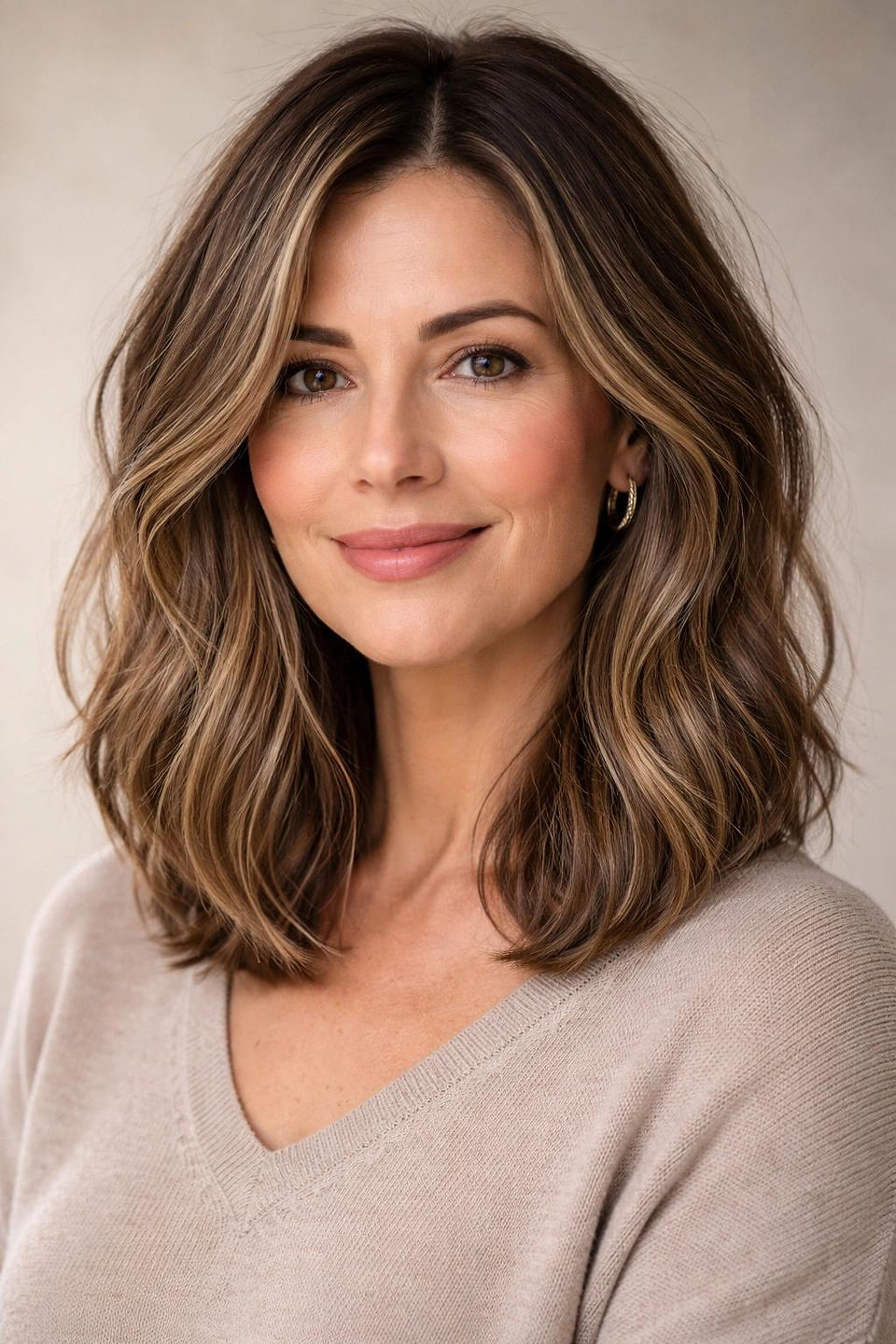
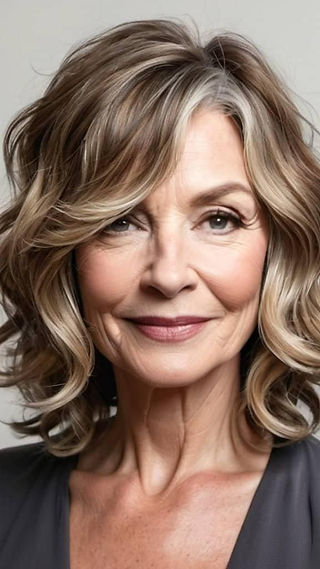
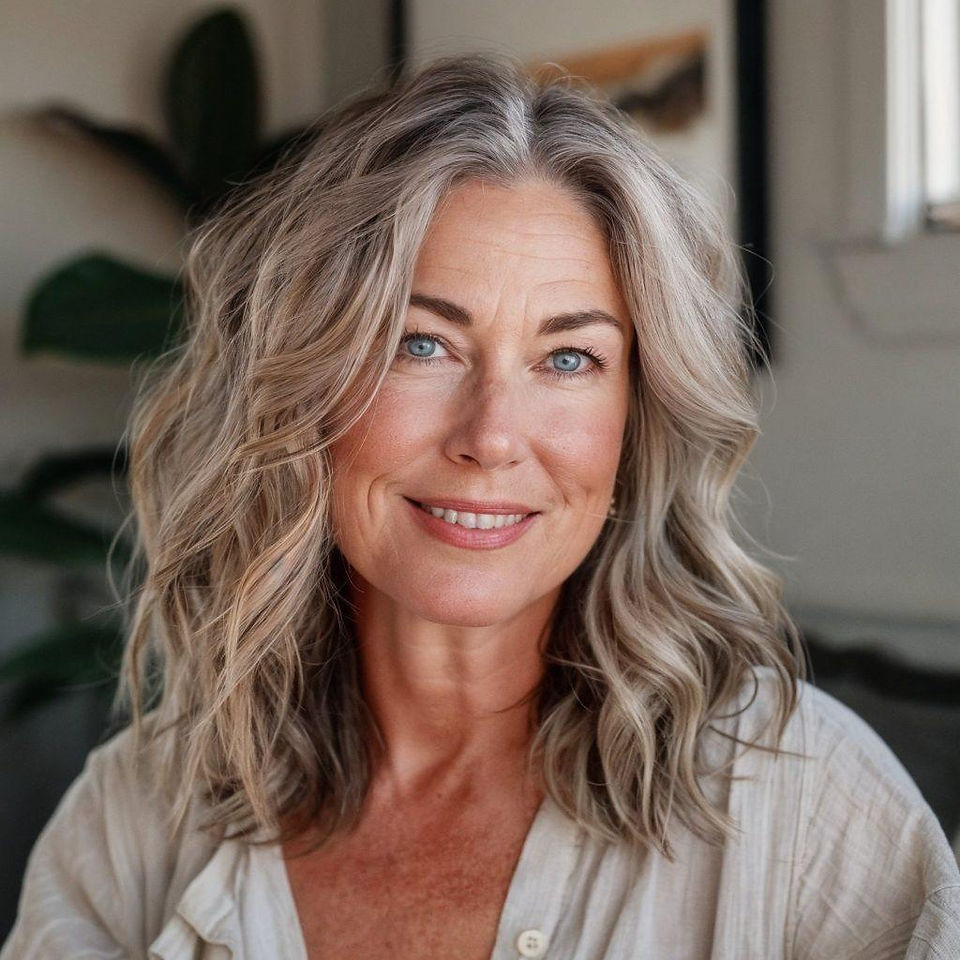
Loose waves add fullness and are especially flattering when the hair has become finer. Use a curling iron with a medium-to-large barrel, wrapping sections away from the face and leaving the last inch or so of the ends out. Once the hair cools, loosen the waves with your fingers or a wide-tooth comb.
The goal is not a head full of identical curls. Slightly imperfect bends look softer, fresher and more modern.
Air-Dried Texture


If your hair has a natural wave, the lob can make it much easier to work with rather than against your texture. Apply a light curl cream or foam to damp hair, scrunch gently and allow it to air-dry—or use a diffuser on low heat.
Avoid heavy creams and oils that can weigh mature hair down. Start with less product than you think you need and add more only if necessary.
Sleek and Straight
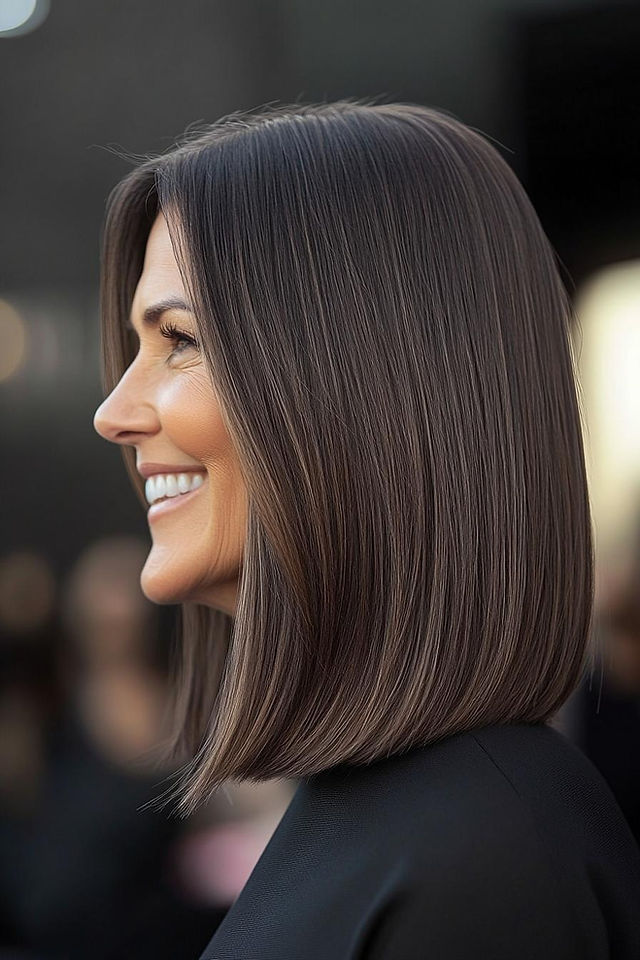


A straight lob can look elegant and sophisticated, particularly with a clean center or side part. Keep it soft by maintaining a little lift at the crown and avoiding an overly flat, rigid finish.
Run a flat iron quickly over the hair rather than pressing each section repeatedly, and use a heat protectant every time. Mature hair tends to be more vulnerable to dryness and breakage, so lower heat is usually the better choice.
Small Details That Keep It Looking Modern
How the long bob is finished can make the difference between timeless and dated.
Avoid excessive teasing, stiff hairspray and a perfectly rounded “bubble” shape. Instead, aim for soft volume at the crown, movement around the face and ends that look natural rather than overly curled under.
The part matters, too. A center part creates a sleek, contemporary look, but it is not mandatory. A soft side part can be more flattering if you want extra lift or prefer to soften asymmetry. The best part is the one that complements your face and works with your natural growth pattern.
Bangs can also transform a lob. Wispy bangs, curtain bangs or a long side-swept fringe can camouflage forehead lines, highlight the eyes and make the entire cut feel fresh. They should be soft and movable—not thick, blunt and difficult to maintain unless that look genuinely suits your hair and style.
Healthy Hair Makes the Cut
No haircut can completely disguise dry, damaged ends, which is one reason the lob works so well: it encourages regular trims and keeps the weakest part of the hair from becoming the focus.
Use a moisturizing shampoo and conditioner designed for your hair type, but be careful with very heavy formulas if your hair is fine. A weekly conditioning mask can help restore softness. Limit high heat when possible, and protect silver or color-treated hair from sun exposure and hot tools.
Regular trims—usually every six to eight weeks—will preserve the shape and prevent the ends from looking thin. If you prefer fewer salon visits, ask for a slightly longer, less structured version that will grow out gracefully.
The Haircut That Meets You Where You Are
The long bob is flattering not because mature women are supposed to follow a particular set of beauty rules, but because it works with the changes that often come with age. It can make fine hair look fuller, dry ends look healthier and facial features appear lifted and softened. It is easy to dress up, easy to wear casually and long enough to tuck behind the ears or pull into a small ponytail.
Most of all, it offers something many of us want from our style now: polish without fuss.
The best haircut at this stage of life is not one that tries to make us look younger. It is one that makes us look like ourselves—current, confident and beautifully at ease. For many women, the long bob does exactly that.


Comments